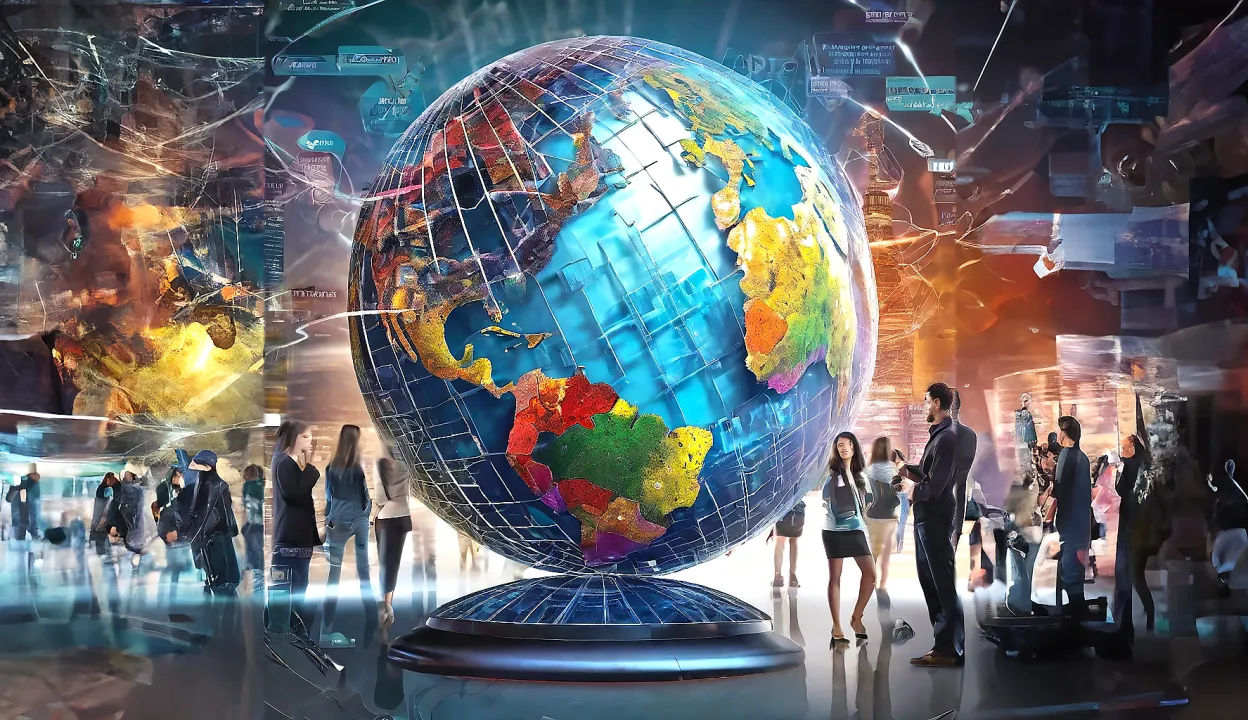
Travel has always been about more than just getting from one location to the next. It's about what people see of themselves how they see themselves, what they value, and what they're searching to find beyond the boundaries of normal life. The global travel landscape of 2026/27 is created by a fascinating tension between the desire for genuine travel and the pressures posed by excessive tourism and the ease of technology and the desire for a genuine human experience as well as between the growing awareness of travel's environmental footprint and the constant desire to go finding something new. Here are ten key emerging trends in travel that will shape how the world travels in 2026/27.
1. Slow Travel Gains Ground The Highlight ReelThe approach of packing the maximum number of destinations into a limited time trip designed for content on social media rather than genuine travel, is becoming obsolete in favor of a different method. Slow travel, which involves spending more time on fewer trips, using less accommodation rather than staying in hotels purchasing locally, and engaging with the destination with a speed that gives some sort of genuine familiarity is increasingly attractive to travelers who have tried the highlight reel, only to find it wanting. The shift is the result of a revision of what travel is all about and what makes it worth all the effort and expense.
2. In the wake of overtourism, there is a need to reconsider The Most Popular DestinationsA growing number of the most popular destinations around the globe are implementing measures to manage the number of visitors after years of unchecked growth in tourist numbers that have pushed infrastructure the ecosystems, local communities to breaking point. Entry fees, visitor cap restrictions on access to sensitive sites, as well as increased costs designed to reduce traffic while increasing revenue per visitor are becoming more frequent. This means for travelers more planning, longer lead times and sometimes real-time rethinking about which destinations are worth considering. The trend is also driving renewed interest in less popular destinations that are similar to the experience without the crowds.
3. Sustainable Travel Moves From Niche To ExpectationThe awareness of the environmental impacts of travel, specifically aviation has increased significantly and is beginning to alter the behavior of travelers in tangible ways. Travelers are increasingly seeking sustainable travel options, hotels that have genuine sustainability credentials, and itineraries that are positive to the cities they visit instead of just extracting a few moments from them. The demand for sustainable and credible transport options is rising fast enough that greenwashing which has always been evident in this business, is facing greater scrutiny. Businesses that show genuine social and environmental ethical responsibility are discovering it to be to be a powerful differentiation.
4. Technology transforms the Travel Experience From Beginning To EndA range of AI-powered tools to plan trips that build personalised itineraries based on personal preferences, to seamless digital border crossings that are real-time translators, and lodging platforms that connect travelers with adventures that go beyond the traditional hotel room, technology is changing every stage of travel. The friction that was once a part of international travel, the queues and the paperwork language barriers, and information gaps are now being gradually reduced. If you're an experienced traveler the majority of this will mean an increase in time spent on the experience. First-time travelers and those who prior to this had a difficult time traveling internationally This is the process of removing the barriers that prevented them from trying.
5. Wellness Travel expands into a Major MarketHealth and wellness has become one the fastest-growing areas of the travel industry. Many travelers are now designing their trips around experiences that enhance their physical and mental health instead of considering wellbeing as an incidental bonus of the perfect vacation. Affiliated wellness retreats, spa destinations with digital detox, guided sleep retreats, and trips that are based around hiking meditation, and yoga are all increasing rapidly. The post-pandemic review of priorities has made investments on health and recovery not only appropriate but aspirational for an increasing and rising segment of travelers.
6. Culinary Tours Are a Major MotivationFood is a fundamental part to the traveling experience, however for a growing proportion people, food is now the primary motive, not merely being a pleasant side effect. Destinations are selected because of their food traditions in restaurants, markets and markets and the opportunity to master the techniques of cooking that can't be duplicated at home. Food tourism encompasses every budget degree, including street food and trail tours throughout Southeast Asia to reservation-only tasting menus at famous restaurants. The worldwide impact of food-related media and those communities that have sprung around it have resulted in a large and engaged audience with whom eating well isn't just an enjoyable experience but a real form of cultural exploration.
7. Solo Travel is Continuing to Experience a Major GrowthSolo travel, particularly among women, is one of the most stable growth trends in the industry. Information and education, stronger traveler communities, improved safety infrastructure in many places, and a shift in the culture of accepting solo travel as empowering instead of atypical have all contributed to. The hospitality sector has given way to more solo-friendly options including social hostels specifically designed specifically for adult travelers as well as boutique hotels offering individual-room prices. Travel operators have stepped up limited-group departures that are specifically designed to cater to those traveling on their own who need company without the commitment of travelling without a partner.
8. The Return of Expeditionary TravelAt the other different end of the spectrum to the typical weekend getaway, there is a growing demand for more ambitious, extended journeys. Overland routes that last for months, lengthy distance trails, ocean crossings systems as well as expedition-style travel that requires serious preparation and commitment have attracted travelers who are looking for experiences that are different from everyday life, rather than simply taking it to a new place. Flexibility in remote work has made longer trips practical for people active or retired. The aim of embarking on the most significant trip of your life that needs the planning, determination, and delivers transformation rather than just a memory, is finding many more potential customers.
9. Space And Extreme Destination Tourism Edges Toward RealitySpace tourism has been a only option for the very wealthy, but the trajectory will be towards wider accessibility over time, and the associated excitement is generating genuine mainstream curiosity about what travel at its most extreme frontier looks like. It is also evident that extreme tourism, which includes Antarctica deep ocean areas continue active volcanic sites and the most remote inhabited areas on Earth, is growing as technology and specialized operators make previously unimaginable journeys feasible. A desire to experience experiences that feel genuinely rare in a world where most destinations appear to be mapped and readily accessible is driving curiosity in the far reaches of what travel could be.
10. Travel can be a vehicle for A Meaningful ContributionVoluntourism is not without its challenges. It has a difficult story, with well-meaning efforts sometimes causing more harm then good. A more sophisticated approach is gaining traction, whereby travelers strive to give back to the places they visit without the need to replace local labour or setting external agendas. Volunteering based on skills, conservation trips with a real scientific basis, and models of community tourism that focus spending on local economies are all on the rise. The desire to leave a spot that is better than how you found it or at the very least to be sure that you haven't led to a worsening of the situation, are becoming a bigger factor in the way that a responsible and expanding portion of travelers plans and reflects on their journeys.
Travel in 2026/27 is more diverse, more self-aware and in many ways more exciting than has ever been. The tensions it navigates, between access and preservation comfort and depth, individual aspiration and collective accountability, can't be easily resolved. However, the operators and travelers who are genuinely addressing those tensions are generating a brand new form of exploration that is more authentic and significant than the one it is gradually replacing. To find additional insight, visit some of the leading päivänmedia.fi/ and find trusted coverage.
 The Top 10 Contemporary Parenting Changes That Every Family Today Needs To Know In 2026/27
Parenting has always been shaped by the social, economic and technological contexts that it takes place. the environment of 2026/27 will be distinct in ways that are creating new challenges and new opportunities for families. The landscape parents are navigating encompasses a digital world that is of a new complexity, a changing understanding of the development of children along with mental wellness, massive economic pressures impacting family life as well as a significant cultural moment that is changing the way we think regarding how children must be educated. Here are ten parents' trends that every modern family needs to know about as we move into 2026/27.
1. Screen Time Allows For Quality Screen ConversationsThe debate over screen time and children has grown beyond the simple measure of the total amount of screen time and into more nuanced discussions about what children actually are doing using screens, and with whom and what they are doing in which context. Researchers are increasingly separating passive consumption and interactive engagement as well as creative production, and the social connection through technology, and is finding that these all have an impact on development that is different. Parents and educators are shifting from trying to enforce hours limits that are difficult to maintain towards children's capability to use digital content thoughtfully, deliberately and in a healthy way Skills that will benefit them much better than the enforced restriction that is lifted once the parental supervision is taken away.
2. Mental Health Awareness Changes the Way Parents Respond To ChildrenThe massive increase in the public's mental health literacy over the last decade is changing the way that parents view and respond to the emotional and behavioural challenges of their children. The effects of neurodevelopmental disorders, anxiety that affect emotional regulation, and the negative effects of bad experiences are all being interpreted more thoroughly by a new generation of parents that has itself benefited from more inclusive conversations regarding mental health. This has led to a shift toward earlier identification of struggles, less stigma of seeking help, and parenting practices that focus on the psychological well-being and emotional attunement in addition to the standard developmental milestones. Mental health services for children are under pressure in many countries, yet the demand that causes this pressure indicates a positive change in awareness and help-seeking behaviour.
3. The Stresses Of Parenting Intensively Get a Pushback Increasingly StrongThe concept of intense parenting that is marked by extensive parental involvement in every aspect of children's lives and crammed schedules of activities, continual enrichment, and treating of childhood as a task designed to be streamlined is facing a significant cultural criticism. Research on the value in unstructured play, developmental importance of boredom and the potential dangers of busy children's lives for stress and autonomy growth, and the unsustainable high pressures that intensive parenting can place on parents themselves are gaining general publics. There is no pushback to neglect but toward a recalibration that provides children with more space that they can be autonomous and more chance to work through challenges independently as a foundation for resilient.
4. Technology influences both the challenges and Tools of Modern ParentingDigital technology is one of the major obstacles parents face as well as it is one of the best and effective instruments to help support parents. AI-powered education platforms customize learning in ways that support children with special needs. Online communities help parents who face similar difficulties with expertise, information, and solidarity. Monitoring and safety tools provide parents an insight into the world that their children are. However, digital media can be a source of stress for children and the challenge of establishing limits for their digital lives across the growing network of connected devices, and the complexity of the task of preparing children for a technological environment that is changing quickly, all represent completely new parenting challenges for parents who do not have established playbooks.
5. Co-parenting and various family structures are a normal part of life.The variety of the family structures that are raising children in 2026/27 is much greater than at any time before and the social and institutional frameworks surrounding family life are unevenly but remarkably, evolving in response to this reality. Co-parenting arrangements after a breakup or the break-up of a family with a single parent, single parent households, blended families, and multi-generational households are all represented in substantial number. The main predictor of positive child outcomes across all of these settings is good quality relationships and the solidity and warmth of an context, rather than a specific model of family structure. Parenting support, advice, and even community have been refocused around that insight rather than the one normative family model.
6. Fathers And Non-Primary Caregivers Take on more active rolesThe caregiving role of families is shifting, driven by shifting cultural expectations, more equitable parental leave policies in a variety of countries, flexible work arrangements that make active fatherhood more realistically achievable, and also new generations of fathers who expect and want deeper involvement in the lives of their children, than previous generations typically experienced. The change is not complete and uneven across various demographic, cultural, and geographic settings, however the direction is evident. Research consistently proves benefits for mothers, children, fathers and families when caregiving is more evenly dispersed, which is a convincing evidence base alongside the cultural shift in.
7. Financial pressures can alter the way families make decisionsThe economic pressures facing families during 2026/27 will be significant and affect decisions about family size, childcare schooling, housing, as well as the distribution of paid and unpaid labour as seen across the information. The cost of childcare in many countries consume a proportion of income for households, which makes working full time financially less appealing for the parents in households with dual incomes especially at less income. Housing costs can influence decisions regarding the place families live and how they will be living in. The aspiration to provide children with the opportunities and experiences that generations before assumed were standard is running up against financial realities that require a difficult decision-making process. Family stress is the most reliable predictor of less favorable results for children, which makes the economic environment of parenting to be a major concern for policy as as a personal one.
8. Nature And Outdoor Experience Become Deliberate Parenting PrioritiesThe generation of children that is growing into increasingly digital urban, indoor and outdoor settings has attracted significant parental and educational effort to ensure that children engage with natural surroundings as a priority as an unintentional consequence. The research evidence supporting the physical, mental, and physical health benefits of regular outdoor and natural-based experiences that children have is a robust and expanding. Forest school programs include outdoor education, the basic notion of prioritizing unstructured outdoor activities are all in response towards the recognition that children's inherent connection with the natural world needs to be actively developed instead of accepted in the world that many families inhabit.
9. Educational Philosophies Diverge Beyond Traditional SchoolingThe amount of parental involvement in educational alternatives in contrast to conventional schools has increased by a significant amount. The home education model, democratic schools and Montessori schools, Waldorf approaches, hybrids mixing home education and microschools and group learning, as well as schools serving small groups of families are all attracting parents who feel that conventional schooling isn't serving their children's needs, values or learning style in a way that is suitable. The epidemic has demonstrated to many families that learning can happen successfully outside the traditional school setting and a significant proportion of those families have not changed their minds to the conventional model. Technology for education makes the options accessible to alternative strategies greater than at any previous point thus reducing the practical barriers to the exploration of education.
10. "The village" Model Of Childraising Searches For A Modern FormThe severing of long-distance family relationships, secure community and informal mutual support systems which were once the norm for families with children has left parents feeling isolated with responsibilities that previous generations shared more broadly. The search for modern equivalents of the community, groups of families who share resources to support, as well as being present in the lives of each other, is producing new forms of intentional community or cooperative childcare arrangements and neighbourhood associations based around shared parental assistance. Tools that connect parents who face similar challenges provide some relief, however the most effective solutions will be those that actually create physical contact and ongoing determination between families who opt to raise their children in a genuine relationships with one another.
The parenting of 2026/27 will be demanding it, but also rewarding, and is more conscious than at previous points in history. These trends cannot provide a definitive approach to raising children, because there is no such thing. What they show is an entire culture that is thinking more critically, more openly and more in a collective way about what children require for their development, and scouring and searching with intention for conditions of relationships, environment, and conditions that could provide it. To find further context, browse a few of the best osservatoriourbano.it/ to learn more.